Sinaloa, Mexico
The Power of the DogSinaloa, Mexico, is the point of origin for the novel’s opium trade and a landscape repeatedly reshaped by the campaign against it. Its poppy-growing mountains are subjected to Operation Condor, but the destruction of the fields does not end the business: it scatters its people and helps transform a regional trade into a national organization. The novel’s return to Badiraguato, where poppies bloom again and Adán Barrera lives under the protection of his reputation, makes Sinaloa both the trade’s enduring home and a measure of how little the campaign ultimately changed.
Setting and the Poppy Economy
The opening locates the action in Badiraguato District, in the State of Sinaloa, in 1975. The region’s importance is grounded in its growing conditions: the Sierra Occidental is described as having an exceptional combination of altitude, rainfall, and soil acidity for cultivating Papaver somniferum. The poppy produces opium that is processed into Mexican Mud, a cheap and potent heroin sold in American cities. Sinaloa is therefore not merely a backdrop to the drug trade; its terrain and agricultural conditions make it one of the trade’s material foundations.
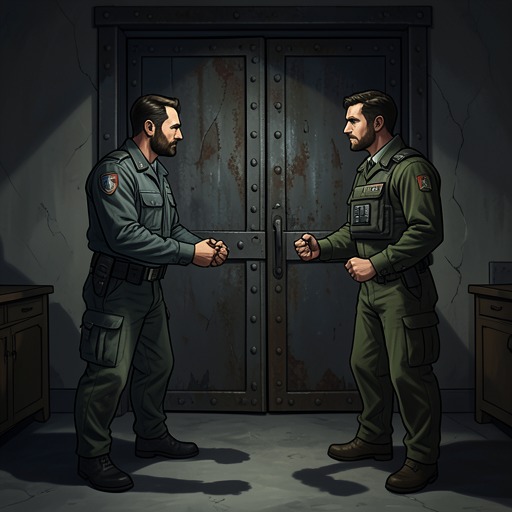
Before the military campaign, Adán is a twenty-year-old accounting student and aspiring boxing promoter, not yet planning to enter the drug business. He and his brother Raúl run a gym, where Art Keller arrives as an ambitious believer in the War on Drugs. Adán befriends him and introduces him to their uncle, Miguel Ángel Barrera, then both a leading police figure in Sinaloa and a major opium grower. That meeting binds the region’s two central strands: the American effort to suppress the trade and the local power structure that will adapt to the effort and exploit it.
Operation Condor and the Scattering
The American War on Drugs opens a military front in Sinaloa. Ten thousand Mexican army troops move through the valley near Badiraguato alongside squadrons of the Municipal Judicial Federal Police and roughly a dozen Drug Enforcement Administration advisers, including Art Keller. Soldiers proceed on foot and horseback. Their orders are to poison the poppy fields, burn what remains, and scatter the gomeros who cultivate them. The campaign treats the Sinaloan mountains as the source of heroin and seeks to destroy the source at its point of production.
The operation leaves the fields burned and the ground poisoned. Don Pedro Áviles is killed, and the Americans conclude that they have destroyed the source of the problem. Miguel Ángel Barrera sees a different consequence. He interprets the destruction as a chance to move beyond Sinaloa: if the people of the region have been forced to scatter, he proposes that they spread through the country and build a broader organization. In his account, fire that consumes also clears space for new growth, and the seeds of the manzanita flourish in different soils. The landscape’s devastation becomes the image through which he recasts displacement as expansion.
From Regional Homeland to National Network
Barrera’s proposed organization distributes operations across three territories bordering the United States: Sonora, the Gulf, and Baja. He assigns García Abrego the Gulf territory, with markets in Houston, New Orleans, Tampa, and Miami, and asks Chalino Guzmán, known as El Verde, to take the Sonoran territory, based in Juárez. Guadalajara has a different function. Although it has no border of its own, Barrera presents it as a safe place from which to serve the Federación. His offer of friendship, protection, and access establishes a system in which regional operators remain connected to his wider authority.
Art Keller’s later intelligence describes the Federación as divided into three parts: the Gulf States, Sonora, and Baja. Each territory is run by a Sinaloan forced out of the home province by Operation Condor. Thus Sinaloa remains central even when the organization’s activity is moved elsewhere: the displaced Sinaloans carry their knowledge and connections outward, while the new territories extend the trade across the length of the United States border. The campaign’s attempt to isolate production in one region has, in the novel’s account, helped create a more distributed structure.
That structure also reaches into national politics and finance. The novel reveals that the Federación helped the ruling Institutional Revolutionary Party steal the 1988 election: computers counting votes malfunctioned when the opposition candidate was expected to win. After a new president takes office on December 1, 1994, two brokerage houses controlled by the organization buy government bonds; the cartels then withdraw capital from the national bank, contributing to a peso devaluation and an economic collapse. The organization profits from the crisis by trading between devalued pesos and dollars, then agrees to bring money back into Mexico in return for a favorable business environment. These episodes extend the consequences of Sinaloa’s displaced drug network far beyond its original fields.
Return to Badiraguato
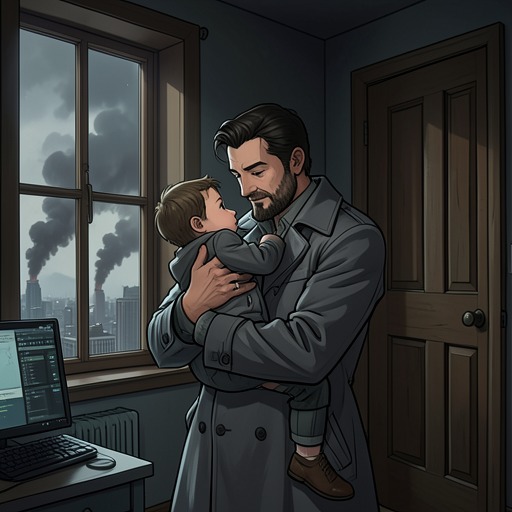
By the novel’s later period, the fields around Badiraguato have recovered from Operation Condor. The soil is refreshed, poppies flower in red, orange, and yellow, and heroin is again in demand in the United States. Adán lives in a modest house outside Badiraguato, back in the countryside among the campesinos. His routine is quiet and controlled: he checks investments and oversees the business on a computer, eats at home, takes a walk along the old dirt road, and spends some evenings listening to village music. Manuel remains nearby as a guard, living in a small house behind the main one.
Adán’s return does not mean that the danger has disappeared. The songs heard from the village recount Raúl’s exploits, El Tiburón’s treachery, and Adán’s success in outfoxing the federales and the Americans; the legend of his untouchability forms part of the local landscape. Yet the closing account also says that his apparently good life is troubled by ghosts. The contrast gives Sinaloa a double significance: it is a place where the trade has visibly regenerated, and a home from which the past cannot simply be cleared away.
Sinaloa as Origin and Consequence
The novel repeatedly makes Sinaloa more than a point on a map. Its ecology enables poppy cultivation; its communities supply the people and relationships from which the trade grows; and its mountains become the target of a military campaign whose unintended consequence is expansion. The sequence from burning fields to dispersed territories and back to blooming poppies links place, policy, and organizational change without suggesting that geography alone determines events.
Badiraguato also holds the story’s personal costs. Art Keller finds Ernie Hidalgo’s body in a ditch there, an event that deepens Art’s reckoning with the harm caused by his own pursuit. Later, the same district becomes Adán’s home again. This return connects the violence of enforcement and the survival of the trade to one continuous landscape. Sinaloa is at once the site the campaign tries to erase, the homeland its people carry elsewhere, and the place where its central figure can resume business after the fields have grown back.